
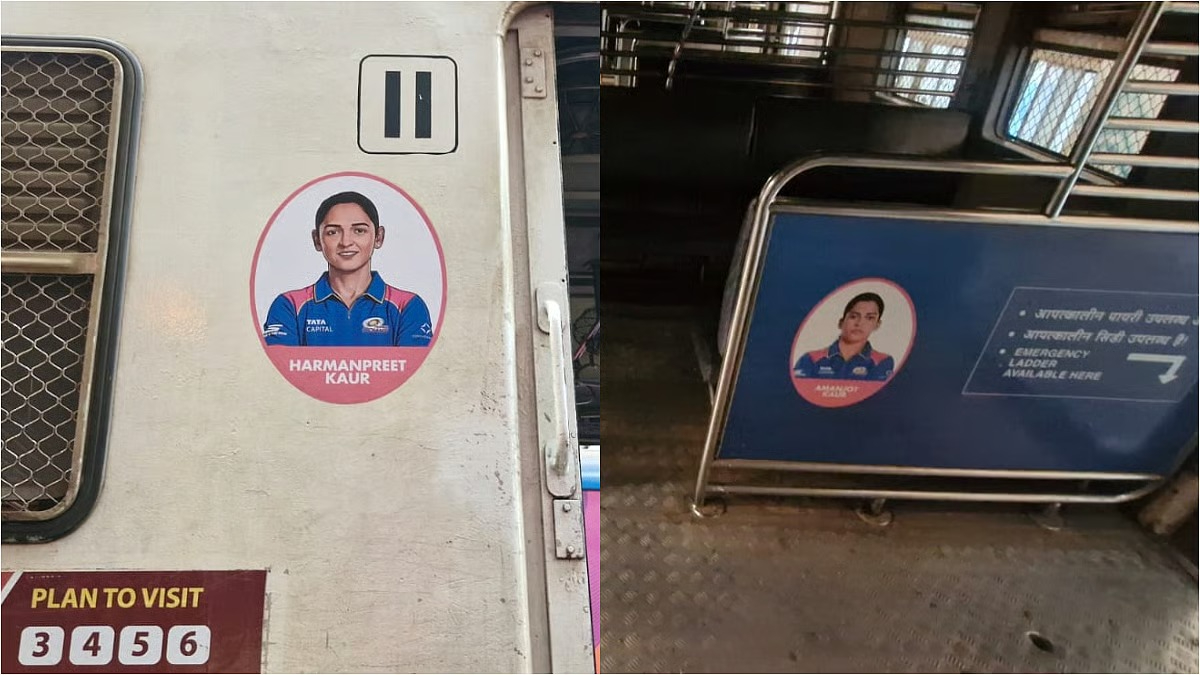
In a city that rarely pauses, recognition sometimes arrives without ceremony.
Recently, inside one of Mumbai’s ever-moving local trains, commuters noticed a small but striking change. A berth in the women’s coach no longer carried the familiar, functional label “Ladies.” In its place were names and faces: Harmanpreet Kaur and Amanjot Kaur.
There was no ribbon-cutting, no announcement echoing through platforms, no crowd gathering for photographs. The tribute existed the way most things in Mumbai do woven into routine. Passengers boarded, adjusted bags, checked their phones, and sat beneath the quiet presence of two athletes who have carried Indian women’s cricket onto global stages.
And perhaps that is what made it powerful.
Mumbai’s local trains are often called the city’s lifeline crowded, restless, democratic. They hold office-goers, students, vendors, dreamers, and people simply trying to get through the day. In a space usually defined by urgency and utility, this small shift from a category to individual names felt meaningful.
A women’s berth is typically marked for function: who can sit here. But by replacing the generic label with the identities of two sportswomen, the space momentarily transformed into something more a reminder of who women are, not just where they belong.
Harmanpreet Kaur, known for her fearless leadership and explosive batting, and Amanjot Kaur, representing the new generation of Indian cricketers, symbolize both achievement and possibility. Their presence inside a daily commuter train bridges two worlds: the extraordinary and the everyday.
For the young girl traveling to school, it may be a fleeting glance. For a working woman heading home after a long shift, perhaps just a passing observation. But somewhere between stations, that image quietly expands the idea of what women can be seen as in public spaces not just passengers, but performers, leaders, national representatives.
What makes the gesture remarkable is its lack of spectacle. In an age where recognition often arrives packaged in campaigns and hashtags, this tribute chose understatement. It did not interrupt life; it blended into it. And in doing so, it reflected a different kind of progress one that doesn’t seek applause, only acceptance.
Representation doesn’t always come with grand speeches. Sometimes, it shows up on a train berth during rush hour, reminding a city in motion that achievement belongs in everyday view.
And the train, as always, moves on carrying stories, people, and now, a quiet salute to women who have made their mark far beyond the tracks.