
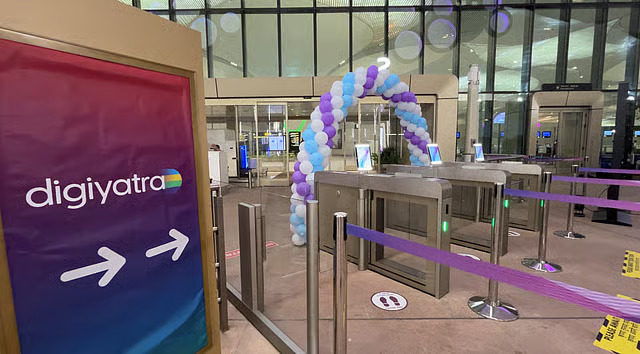
The upcoming Navi Mumbai International Airport has introduced the DigiYatra facility as part of its digital-first passenger experience, aligning with India’s broader move toward biometric-enabled, paperless air travel. This marks a significant step in transforming airports into smart mobility ecosystems rather than just transit infrastructure.
What Is DigiYatra?
DigiYatra is a government-backed initiative that enables facial recognition–based, contactless airport entry and processing. Instead of repeatedly showing ID cards and boarding passes, passengers authenticate themselves using biometric data linked to their travel credentials.
- It uses Facial Recognition Technology (FRT) to create a seamless identity verification journey.
- Travelers register via the DigiYatra app, upload ID details, and link their boarding pass before arriving at the airport.
- At the airport, cameras verify identity automatically at entry gates, security checks, and boarding points eliminating manual document checks.
The goal is to create a paperless, queue-less travel experience while improving operational efficiency and security.
Why This Matters for Navi Mumbai Airport
Navi Mumbai Airport is being positioned as a next-generation aviation hub, not a legacy airport retrofitted with technology. DigiYatra becomes foundational to its design philosophy:
1. Designed as a Digital-First Airport
Unlike older airports where digital tools are added later, NMIA integrates biometric travel into its core infrastructure, helping:
- Reduce congestion during peak traffic.
- Enable faster passenger throughput.
- Support scalable growth for Mumbai’s expanding aviation demand.
2. Operational Efficiency for Airlines & Authorities
Automated identity validation reduces manpower dependency and speeds up passenger flow, enabling airports to handle more travelers without proportional infrastructure expansion.
3. Enhanced Security Through Verified Identity Layers
Biometric validation ensures identity authenticity across checkpoints, strengthening aviation security while maintaining convenience.
How DigiYatra Is Changing the Aviation Industry in India
✦ From Document-Based Travel → Identity-Based Travel
Traditional aviation relies on documents (ticket, ID, boarding pass).
DigiYatra shifts this to digital identity authentication, similar to fintech KYC transformation.
This mirrors how:
- UPI replaced cash verification with digital authentication.
- Aadhaar transformed identity infrastructure across services.
✦ Airports Become Smart Infrastructure Platforms
Airports now function like data-driven mobility systems, integrating:
- Passenger analytics
- Predictive crowd management
- Seamless multimodal travel planning
✦ Reduced Physical Infrastructure Load
Biometric corridors reduce the need for:
- Large check-in counters
- Manual verification queues
- Paper-based compliance systems
This enables smaller physical footprints with higher capacity—a key urban planning advantage for dense cities like Mumbai.
Sustainability Impact: Human + Nature Growth
DigiYatra is not only about convenience it contributes to environmental and human-centered sustainability.
 Environmental Benefits
- Paperless travel reduces printing of boarding passes and documents.
- Faster processing lowers congestion and idle-time energy usage in terminals.
- Optimized passenger movement reduces infrastructure strain, enabling more efficient airport design.
 Human-Centric Benefits
- Less time in queues → reduced travel stress.
- Contactless processing supports hygiene and safer travel environments.
- Accessibility improves for elderly and frequent flyers through simplified journeys.
Early User Sentiment Reflects the Shift (Ground Reality)
Travelers who have used DigiYatra at operational airports describe the experience as fast and seamless:
“I didn’t have to pull out my ID or boarding pass once… saved so much time.”
Others highlight reduced waiting times and smoother entry processes, though discussions also show concerns about data privacy indicating the need for strong governance as adoption scales.
This mix of enthusiasm and caution is typical of any major digital infrastructure transition.
Strategic Significance for India
DigiYatra aligns with India’s broader ambition to build Digital Public Infrastructure (DPI) for mobility, just as:
- Aadhaar enabled identity,
- UPI enabled payments,
- ONDC aims to enable commerce.
In aviation, DigiYatra could become the identity layer for travel ecosystems, eventually integrating with rail, urban mobility, and hospitality.
What This Means for the Future of Navi Mumbai
Navi Mumbai Airport is not just relieving congestion from Mumbai it is becoming a prototype of India’s next mobility architecture, where:
Infrastructure is digital-first
Passenger experience is biometric-driven
Growth is scalable without ecological overload
Technology supports both efficiency and sustainability