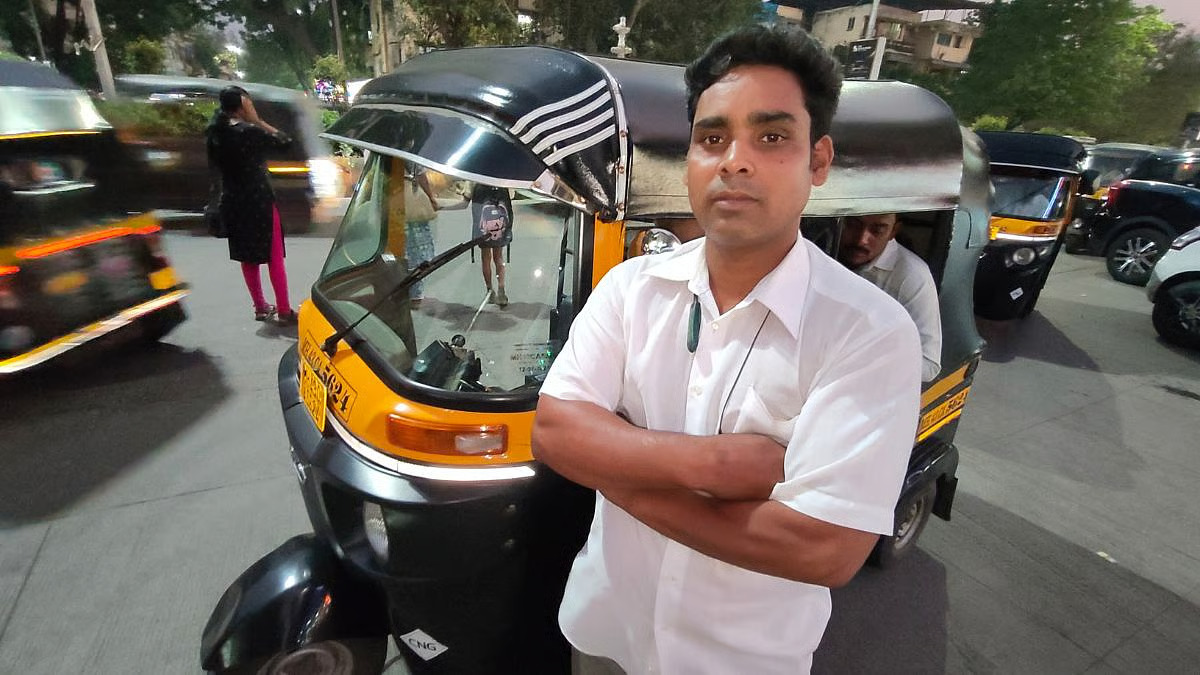
In a city where thousands of auto-rickshaws weave through crowded streets every day, most rides are forgotten the moment they end. But one ordinary day turned into an extraordinary story of integrity for Santosh Shirke a man whose simple decision became a powerful reminder of what honesty truly means.
Santosh, a daily-wage auto-rickshaw driver, had just completed another routine fare. Like countless others trying to make ends meet, his life revolved around long hours on the road, rising fuel costs, and the constant calculation of how much he could save at the end of each day. He had spent an entire year putting aside small amounts of money with a single dream to buy one tola of gold for his family, a symbol of security he had worked tirelessly toward.
Shortly after dropping off a passenger, Santosh noticed a bag left behind in the back seat of his auto. At first, he assumed it contained documents or personal belongings. But when he opened it to identify the owner, he was stunned. Inside was gold jewellery worth nearly ₹16 lakh.
For a man who had struggled for a year to afford a fraction of that value, the moment could have easily become a turning point in another direction. Instead, Santosh did not hesitate. He drove straight to the nearest police station and reported the forgotten bag.
There was no calculation, no pause to consider what the money could solve, no thought of personal gain. His instinct was clear: it was not his to keep.
Authorities later traced the rightful owner, who had been desperately searching for the lost jewellery. The return of the bag was not just a relief it was a restoration of trust. In a time when stories of loss and deception often dominate headlines, Santosh’s action stood out precisely because it was so selfless.
When asked why he did it, Santosh reportedly gave a simple answer: the belongings were someone else’s hard-earned assets, and returning them was the only right thing to do. That clarity of conscience reflected values shaped not by wealth or education, but by upbringing, dignity, and respect for others.
What makes his decision even more powerful is the contrast between circumstance and choice. Santosh did not act from abundance; he acted despite scarcity. His honesty was not convenient it was costly. Yet he chose integrity over opportunity, character over temptation.
Today, his story travels far beyond the confines of a single auto ride. It reminds us that ethics are not defined by profession or status, but by the decisions we make when no one is watching. In the rush of urban life, Santosh Shirke showed that the true wealth of a person is not measured in gold, but in values that cannot be weighed or priced.
His auto may still carry passengers from one destination to another, but for many who hear his story, Santosh has already taken society a step forward toward faith, fairness, and the belief that honesty still has a place on our streets.