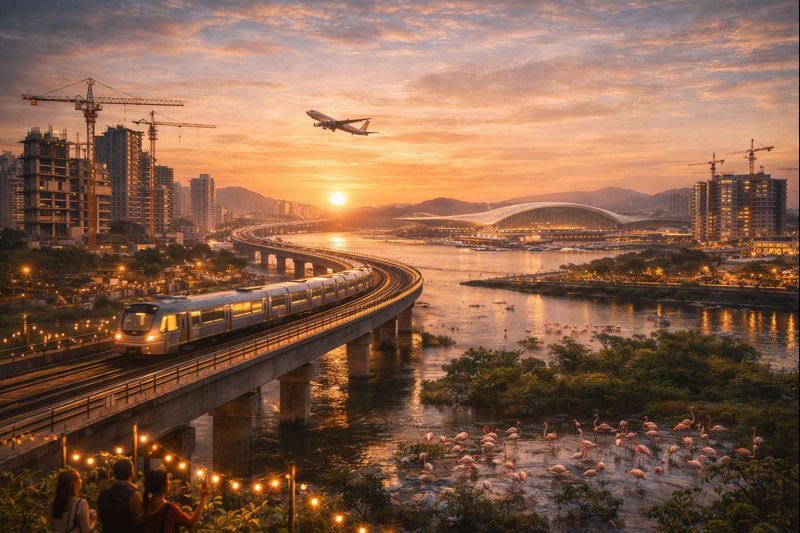
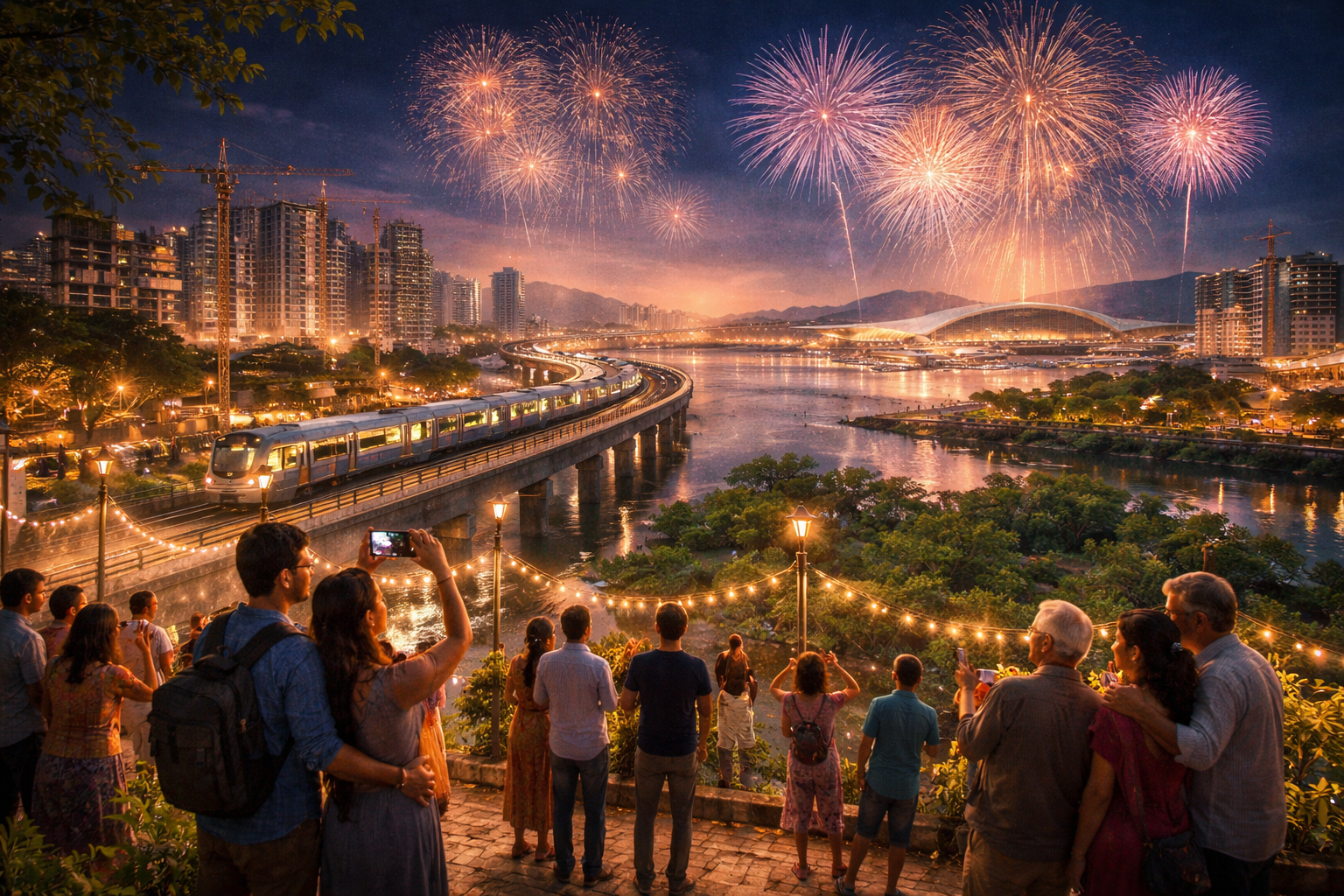
What began in the early 1970s as a carefully planned satellite city has today transformed into one of India’s most ambitious urban success stories. Conceived by CIDCO to ease the mounting pressure on Mumbai, Navi Mumbai has evolved far beyond its original mandate emerging as a self-sufficient, future-ready metropolis with a distinct identity of its own.
At the heart of this transformation lies infrastructure. Landmark projects such as the Mumbai Trans Harbour Link (MTHL), the expanding Navi Mumbai Metro, and the operational launch of Phase 1 of the Navi Mumbai International Airport on December 25, 2025, have redefined the city’s connectivity and economic potential. These developments have not only shortened distances but also reshaped real estate dynamics, driving strong appreciation in southern nodes like Kharghar, Kamothe, Panvel, and Kalamboli.
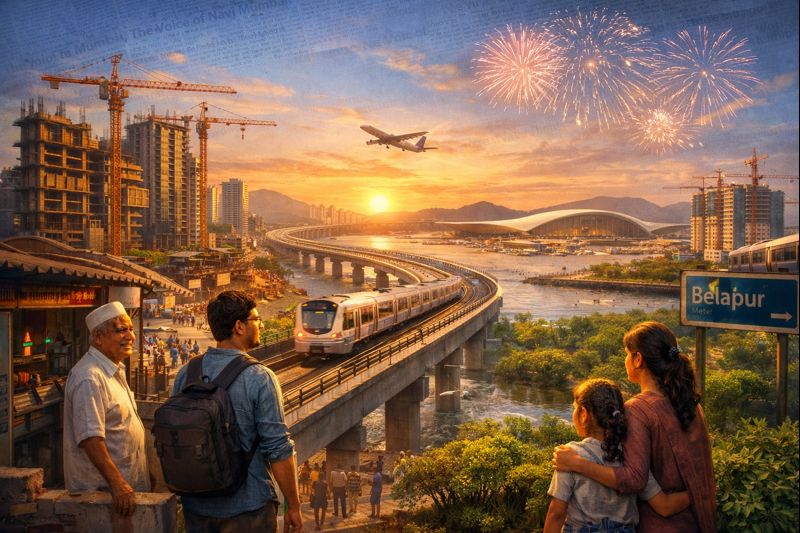
Yet Navi Mumbai’s story is not just about concrete and corridors. It is equally about liveability. The city has consistently ranked among India’s cleanest, securing the third position in the Swachh Survekshan surveys of 2022 and 2023 an achievement that reflects effective civic planning and community participation. Its comparatively lower pollution levels and integrated amenities continue to attract families, professionals, and institutions alike.
Over the years, Navi Mumbai has also carved a niche as an educational and cultural hub. Premier academic institutions, expansive green spaces, and global-standard sports infrastructure most notably the DY Patil Stadium, which hosted the finals of the 2022 FIFA U-17 Women’s World Cup have elevated the city’s national and international profile.
With its coastal setting, thoughtfully designed leisure spaces, and strategic location linking Mumbai with emerging growth corridors, Navi Mumbai exemplifies what planned urban development can achieve when vision meets execution.
In essence, Navi Mumbai’s journey from a supporting act to a leading urban centre stands as a compelling case study in smart planning, infrastructure-led growth, and sustainable urbanisation. It is no longer just an extension of Mumbai; it is a city that has confidently come into its own.