
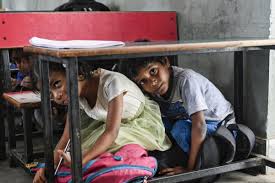
For generations, schools have been seen as safe spaces extensions of home where learning, discipline and values are shaped. But a chilling series of incidents from 2024 and 2025 has shaken that belief, forcing parents across India to confront a terrifying truth: children are no longer always safe within school walls. And when institutions fail, families, communities and the law must step in.
A Pattern of Horror Across India
In August 2024, the quiet town of Badlapur in Maharashtra woke up to a nightmare. Two kindergarten girls, barely four years old, were allegedly sexually assaulted by a school cleaner inside a washroom. The revelation led to angry protests, a police investigation and eventually the arrest of the accused. A seven-member committee was later appointed by the Bombay High Court to audit safety norms across all schools in the region signalling that this was not a one-off tragedy, but part of a systemic failure.
Soon after, Hyderabad was rattled by a disturbing video: a nursery-class girl being trampled and beaten by a school attendant. The brutality, captured on CCTV and widely shared online, outraged parents across India and highlighted once again how vulnerable young children can be in the absence of supervision and trained staff.
In Ulhasnagar, Maharashtra, a playgroup teacher was booked after a video showed her slapping a 2.5-year-old boy during a recitation session a reminder that emotional and physical abuse often hides behind the façade of “discipline.”
Even elite or well-funded institutions have been implicated. A Coimbatore residential school faced serious allegations under POCSO after a former student revealed repeated abuse between 2017–2019. In Karnataka, a survivor came forward 13 years after being assaulted in a special school for speech and hearing children forcing authorities to reopen the case.
These stories, spread across states and spanning economic backgrounds, reveal a national crisis.
Systemic Abuse Is Not Isolated Incidents It Is a Trend
The National Human Rights Commission also intervened in 2024 after reports of 13 girls being sexually assaulted during an alleged fake NCC camp organized by a Tamil Nadu school — one of the most shocking cases of coordinated abuse in recent memory.
In Telangana, seven students were suspended in 2025 after a violent bullying attack on Class 10 students at a welfare school proving that not all abuse looks like sexual violence; some is peer-driven, normalized and ignored until it turns brutal.
Even hostels are not spared. In early 2025, at a nursing college in Kottayam, a student was tied to a bed and assaulted by seniors in a horrifying ragging case, leading to multiple arrests and a state-wide debate on hostel safety.
How India Is Responding The Beginning of a Safety Revolution
In the wake of these incidents, certain regions have begun implementing structural reforms:
- Noida has mandated every school to form Child Sexual Abuse Prevention Committees.
- Maharashtra has proposed new safety rules after the Badlapur case, including female attendants in corridors, updated CCTV norms and stricter staff verification.
- Schools across metro cities have begun conducting safety audits, installing panic buttons, expanding CCTV coverage and initiating parent-school safety councils.
These changes though promising are still not enough.
A New Era of Parental Vigilance
Perhaps the most significant shift has been among parents. Many now:
- monitor children’s emotional and behavioural changes;
- demand transparency about staff verification and CCTV access;
- refuse to tolerate hush-ups or intimidation from school management;
- withdraw children from unsafe institutions, even prestigious ones.
Parents today are no longer passive consumers they are active protectors, questioning, observing and demanding accountability.
The Urgent Truth
These cases are not isolated. They are warnings.
Every incident reveals gaps in supervision, training, reporting, and institutional responsibility.
But they also reveal something else:
India is finally waking up.
Parents are speaking out. Authorities are responding. Schools are being forced to confront uncomfortable truths. And survivors, some after years of silence, are finding the courage to come forward.
Safety in schools cannot be optional. It cannot be decorative. It must be structural, legal, cultural and non-negotiable.
Because when a child walks into a classroom, they should be stepping into a world of learning not fear.