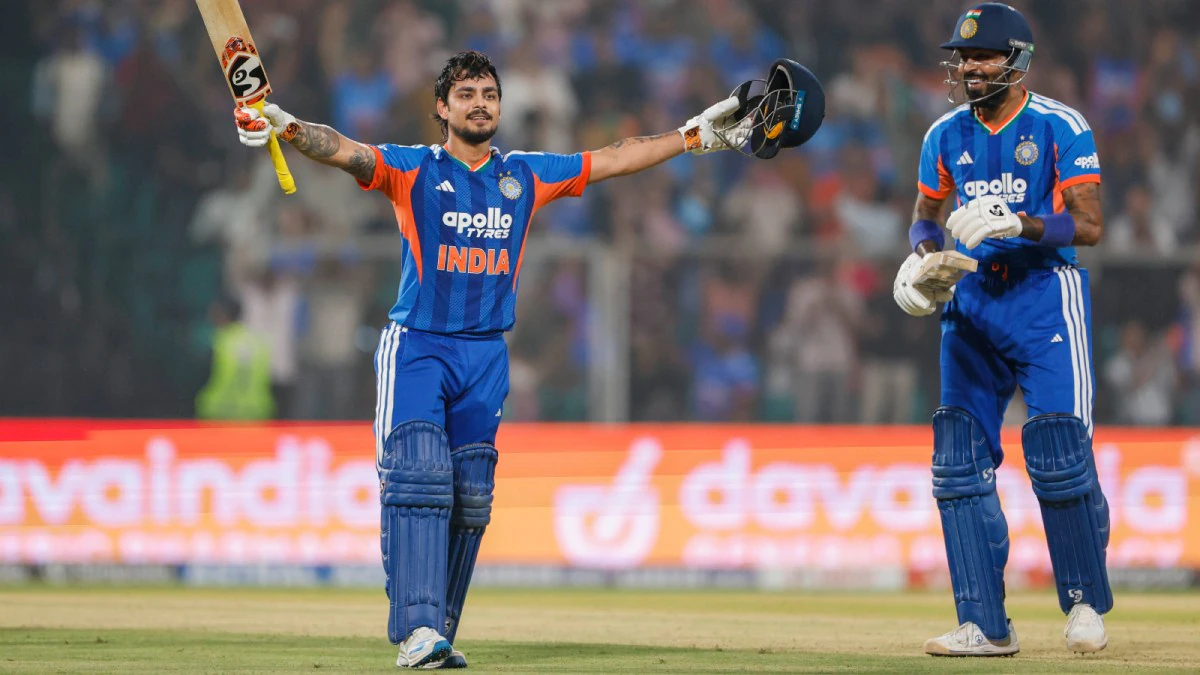
On one of cricket’s grandest stages an India vs Pakistan clash at the ICC Men’s T20 World Cup Ishan Kishan played an innings of rare authority, scoring a fearless 77 off 40 balls and earning the Player of the Match award.
But this story did not begin under the floodlights of Colombo.
It began two years earlier, in a far quieter and far more uncertain moment.
The Setback That Changed the Narrative
After requesting a break from Test cricket during the South Africa tour, citing mental fatigue, Ishan found himself dropped from the central contract list of the Board of Control for Cricket in India.
The fallout was immediate:
- No contract
- No national selection
- A public narrative that questioned his commitment to the game
In elite sport, absence is often louder than performance. For many, such a phase becomes a slow fade. For Ishan, it became a reset.
Returning to the Basics
He went back to domestic cricket away from headlines, back to repetition and routine.
Determined to rebuild from the ground up, he:
- Constructed a practice pitch at home to maximise training access
- Brought in specialists to refine fitness, recovery, and diet
- Spent long hours in the nets correcting technical inconsistencies
- Focused on mental conditioning as much as physical preparation
What stood out was not spectacle, but discipline. Those close to him noted he rarely missed a session and approached practice with the intensity of someone still trying to earn his first cap.
Purpose Beyond Performance
During this phase, he also opened a cricket academy in Patna, reconnecting with the grassroots environment that shaped him.
The academy gave structure to a period that could otherwise have felt like professional exile. Coaching young players, staying embedded in the sport’s ecosystem, and contributing to the next generation provided a sense of purpose beyond personal comeback.
The Return of Opportunity and Results
When selection doors reopened, he was ready not just technically sharper, but mentally steadier.
His innings against Pakistan was more than aggressive stroke play. It carried the composure of someone who had already fought the harder battle away from cameras.
A Career Defined by Response, Not Reversal
Sport often celebrates the visible moment the six, the celebration, the trophy. Yet careers are rarely shaped there. They are built in the unseen stretches: the empty nets, the quiet corrections, the refusal to disengage when recognition disappears.
Ishan’s comeback reminds us that setbacks do not define trajectories. Responses do.
Sometimes, the most important innings is played long before anyone is watching.