
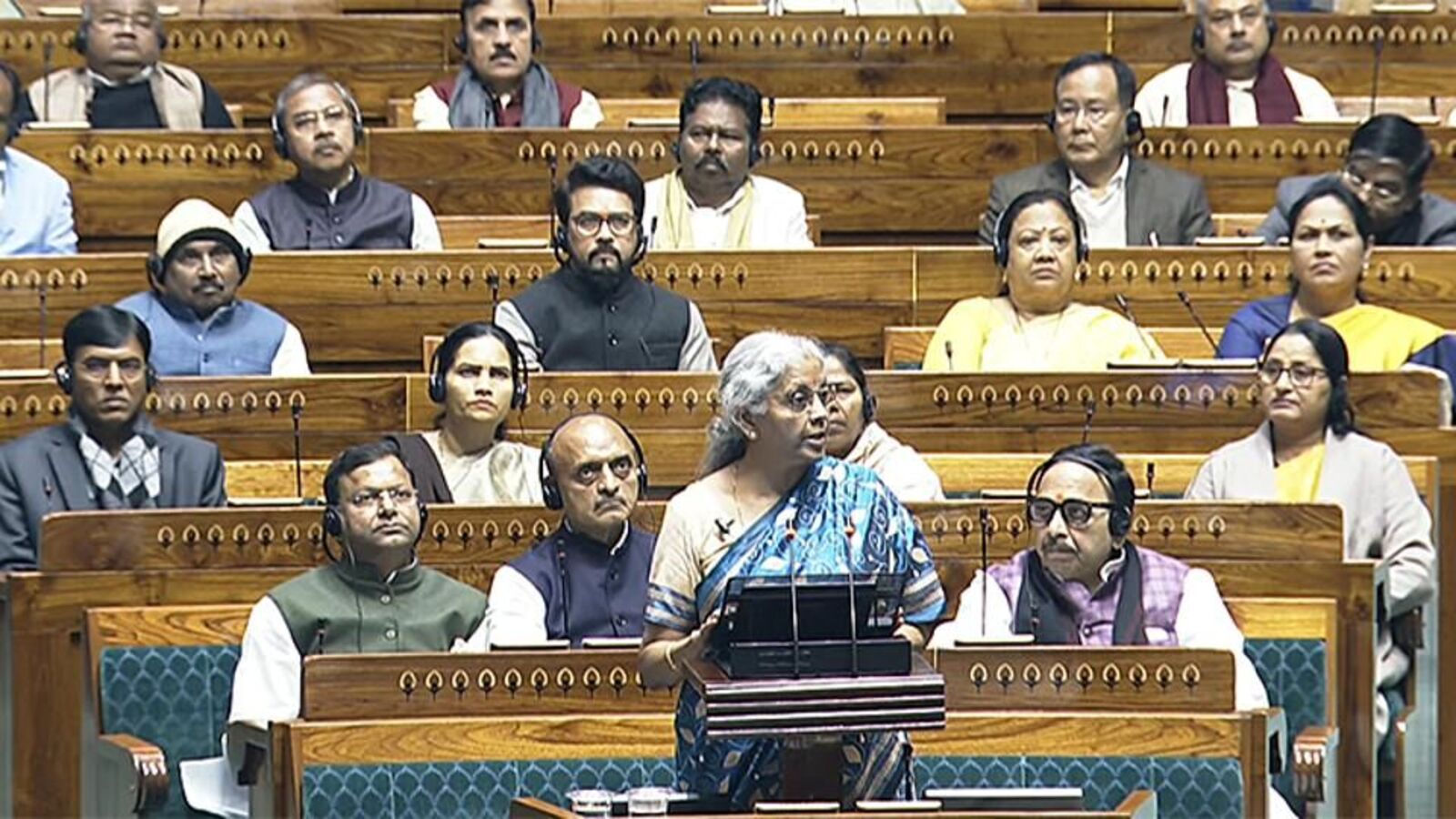
This year’s Budget is notable less for what it announces and more for what it avoids. There are no headline-grabbing giveaways, no sudden policy shocks, and no theatrical promises. Instead, it reflects a calibrated, budgeted approach one that signals confidence in macroeconomic stability while acknowledging fiscal limits. In an election-sensitive environment, restraint itself becomes the message.
At the core of the Budget lies a clear prioritisation of growth sustainability over short-term populism. The government appears to be working within a realistic fiscal envelope, aligning expenditure with achievable revenue assumptions rather than optimistic projections. This is evident in the continued emphasis on capital expenditure, even as revenue expenditure is kept in check. Capital spending remains the primary growth lever not because it is politically attractive, but because it has a measurable multiplier effect on GDP.
India’s GDP trajectory provides the context for this pragmatism. With nominal GDP now crossing the $3.5 trillion mark and real growth stabilising in the mid-single-digit range, the challenge is no longer acceleration at any cost, but durability. Global demand remains uneven, private investment is selective, and consumption while resilient is not exuberant. Against this backdrop, the Budget avoids overstretching assumptions about tax buoyancy or export-led growth.
The focus areas are therefore unsurprising but deliberate. Infrastructure continues to anchor the growth strategy, not as a one-time stimulus but as a long-term productivity play. Roads, logistics, urban infrastructure and energy transition projects receive steady, not spectacular, allocations. This continuity signals policy credibility to investors and lenders alike.
Another key emphasis is on manufacturing and data-driven infrastructure, particularly data centres and digital public infrastructure. The Budget recognises that data is now a core economic asset. Data centres are no longer treated as peripheral real estate projects but as critical national infrastructure supporting cloud services, AI deployment, fintech, and governance platforms. Incentives here are pragmatic: focused on power availability, land facilitation, and regulatory clarity rather than blanket subsidies. The intent is to crowd in private capital, not replace it.
Fiscal discipline remains the quiet backbone of the Budget. The glide path towards deficit consolidation is maintained, signalling to markets that macro stability is non-negotiable. Debt sustainability, especially at a time of global monetary tightening and geopolitical uncertainty, is treated as a structural priority rather than a political inconvenience.
What this Budget ultimately reflects is maturity. It accepts that India is no longer an economy that needs dramatic announcements to signal ambition. The ambition is embedded in execution, consistency, and data-backed decision-making. Growth is being managed, not chased. Risks are being priced in, not ignored.
In that sense, this is a Budget for institutions rather than headlines for investors, administrators and long-term planners. It may not dominate prime-time debates, but it strengthens the economic scaffolding quietly. And in the current global climate, that restraint may be its biggest achievement.