In a small tribal hamlet in Palghar, Maharashtra, where forests breathe history and traditions travel through sound rather than script, a 92-year-old man still lifts a wind instrument to his lips and with it, keeps centuries alive.
Bhiklya Ladakya Dhinda is not just a musician. He is a bridge between generations, a custodian of memory, and now, a Padma Shri awardee recognised in the Unsung Heroes category this Republic Day.
But long before the nation knew his name, his village knew his sound.
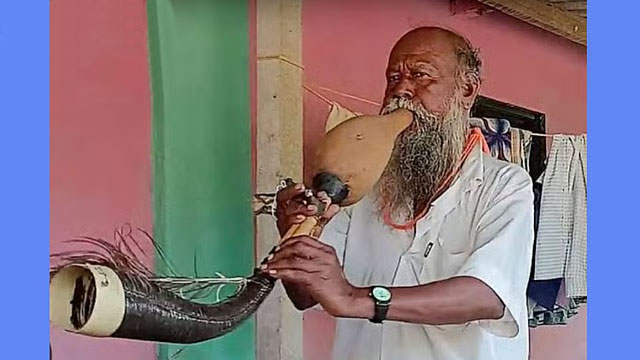
Dhinda was just 10 years old when he first held the Tarpa a traditional wind instrument crafted from bottle gourd and bamboo, its haunting notes once echoing through the fields and forests of Maharashtra’s tribal belt. For many in urban India, it is an unfamiliar sound. For his community, it is identity itself.
Born into a 400-year-old lineage of Tarpa players, Dhinda inherited more than an instrument. He inherited responsibility. The Tarpa is not merely played; it is woven into rituals, harvest celebrations, and collective dances that bind the community together. When the Tarpa plays, the village gathers. When it falls silent, something larger than music is lost.
And silence was a real threat.
Modernisation, migration, and economic hardship steadily pushed traditional art forms to the margins. For Dhinda, poverty was not an abstract struggle but daily reality. Yet he chose not to put the Tarpa down. Instead, he performed wherever he could, taught anyone willing to learn, and mentored young artists often without resources, recognition, or reward.
His mission was simple but profound: the Tarpa must not disappear.
Through droughts, changing times, and the pull of modern livelihoods that drew youth away from tradition, Dhinda remained constant. The instrument aged with him, its notes carrying stories older than the roads that now cut through his region. While the world raced ahead, he stood firm not in resistance to progress, but in protection of heritage.
Today, at 92, his breath still fills the Tarpa with life. And with the Padma Shri, the country has finally paused to listen.
The honour is more than a medal. It is recognition that India’s cultural soul does not live only in grand auditoriums or classical stages. It lives in villages, in oral traditions, in artists who have no spotlight but carry entire histories in their art.
Dhinda’s award celebrates not just one man, but an entire tribal community that has preserved its culture against overwhelming odds. It acknowledges that grassroots folk artists are not relics of the past they are living archives, guardians of diversity in a rapidly homogenising world.
In Bhiklya Ladakya Dhinda’s music, there is no performance for fame. There is only continuity. Each note of the Tarpa is an act of preservation, each teaching session an investment in the future.
As long as his breath flows through bamboo and gourd, the Tarpa will not fall silent. And thanks to him, neither will the story of his people.