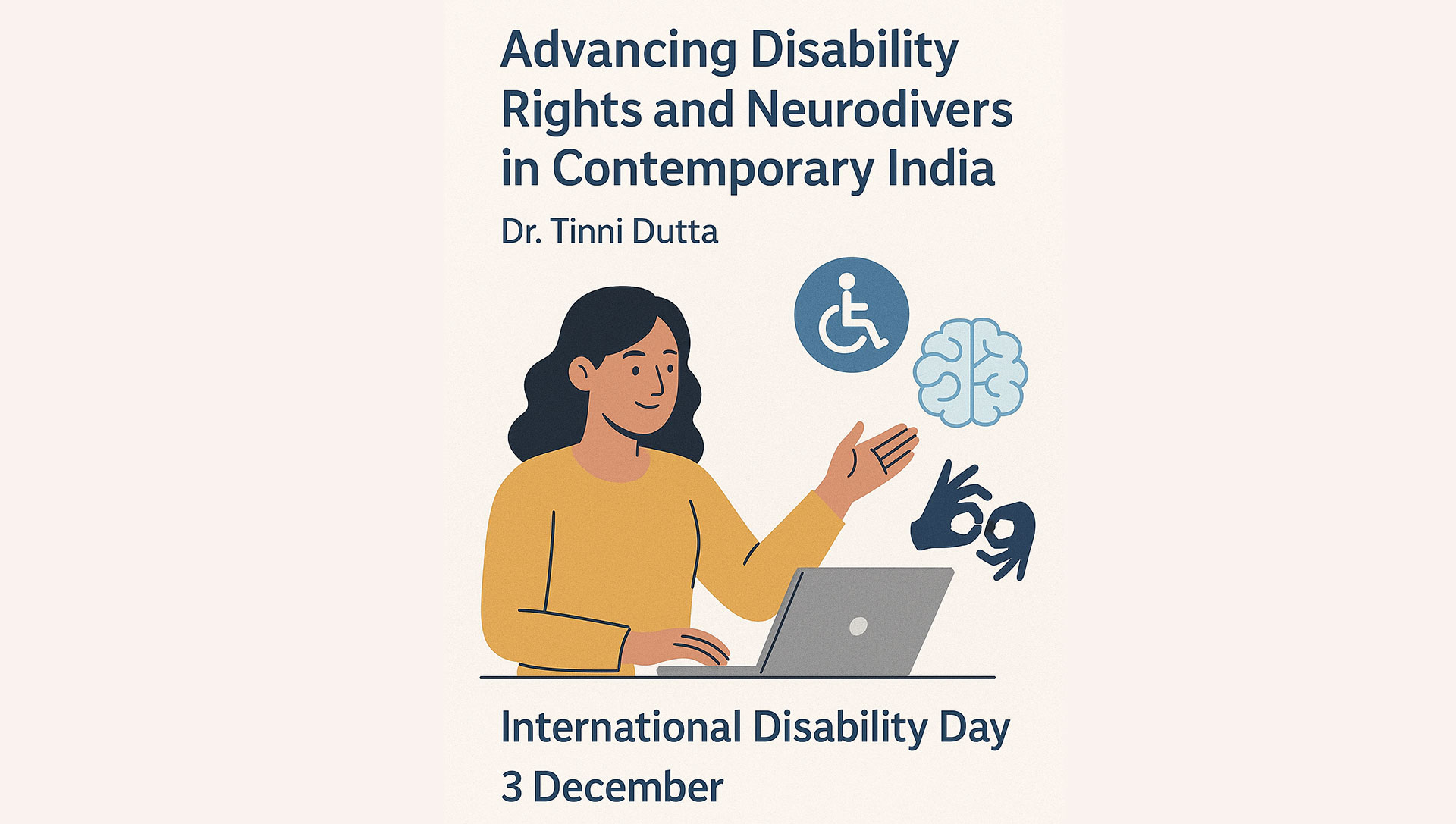
Each year, 3rd December is observed as International Disability Day, a moment to reflect on how far societies have progressed in ensuring dignity, equity, and meaningful participation for persons with disabilities. In India, the disability rights movement has a long and evolving history. It gathered momentum in the 1980s, driven by powerful grassroots campaigns, media advocacy, and a growing public understanding of inclusion. Today, disability discourse in India is witnessing a transformative shift, shaped by rapid technological progress and strengthened by policy commitments towards an inclusive future.
Understanding Intellectual Disability
Intellectual disability is marked by limitations in reasoning, judgment, academic learning, and adaptive behaviour. These limitations affect overall intellectual functioning and day-to-day performance. It is a global condition and, in its severe forms, places considerable emotional, economic, and social burdens on families and communities. In modern India, however, increased awareness, government programmes, and institutional support are helping address these challenges more effectively than before.
A New Era of Government Commitment
In the twenty-first century, India’s policy landscape has expanded to ensure accessibility, empowerment, and social integration for persons with disabilities. A major milestone in this journey is the Accessible India Campaign (Sugamya Bharat Abhiyan), launched on 3rd December 2015. Its goal is to eliminate physical and systemic barriers through focused action in three major areas:
1. Built Environment Accessibility
Ensuring barrier-free access in workplaces, public offices, and educational institutions by providing ramps, tactile pathways, accessible toilets, and inclusive infrastructure.
2. Transportation Accessibility
Expanding travel access via improvements in buses, taxis, railways, and airports, enabling greater independence and mobility for persons with disabilities.
3. Information and Communication Accessibility
Promoting accessible digital platforms, screen-reader friendly websites, audio-visual content, and simplified communication formats so that information is universally usable.
Additionally, the campaign emphasizes Sign Language Access, ensuring interpreters on public television and in civic spaces to support the deaf community.
Key Legislative and Institutional Interventions
1. The Rights of Persons with Disabilities Act, 2016 (RPwD Act)
This landmark legislation, aligned with the UN Convention on the Rights of Persons with Disabilities, expands the recognized list of disabilities and guarantees equality, dignity, non-discrimination, and full participation for persons with disabilities. It obligates institutions to adopt inclusive practices, making accessibility a legal right rather than a privilege.
2. The National Trust Act, 1999
This Act established a national body focused on individuals with autism, cerebral palsy, intellectual disability, and multiple disabilities. It supports lifelong care, legal guardianship, inclusion, and community-based rehabilitation.
Together, these initiatives reflect India’s commitment to building an inclusive social structure rooted in respect, opportunity, and justice.
The Neurodiversity Movement: A Parallel Shift in Mindset
While disability rights focus on equality and accommodations, the neurodiversity movement reframes neurological differences as natural human variations rather than disorders. It embraces conditions such as autism, ADHD, and dyslexia as part of the diverse spectrum of human cognition.
Key Ideas of Neurodiversity
- Neurological differences are not deficits, but unique cognitive styles.
- Strengths such as creativity, pattern recognition, innovation, and hyperfocus often emerge from neurodivergent minds.
- Barriers arise not from the individual, but from societal structures that fail to adapt a core idea within the social model of disability.
- Schools and workplaces must shift from mere “accommodations” to inclusive design and neuro-affirmative practices.
This approach fosters dignity, self-acceptance, and equity for neurodivergent individuals.
Role of Psychotherapy and Creative Therapies
Mental health support plays a crucial role in promoting psychological resilience and emotional well-being among persons with disabilities and neurodivergent individuals.
Art Therapy
Art therapy helps individuals express emotions, enhance self-awareness, and navigate stress safely and creatively. Kapitan (2014) emphasizes its ability to rebalance brain functions affected by trauma, social pressure, and emotional conflict.
Music Therapy
Music therapy enables catharsis, emotional expression, and stress reduction. It improves interpersonal relationships, nurtures self-regulation, and supports overall mental wellness.
These therapies are increasingly integrated into holistic disability support frameworks worldwide.
Conclusion
India’s journey toward disability justice and neurodiversity inclusion is ongoing, but the momentum is unmistakably strong. With progressive laws, accessibility campaigns, and expanding awareness, the country is moving toward a society where every individual regardless of ability or neurological difference can live with dignity, autonomy, and equal opportunity.
The integration of psychotherapy, creative therapies, accessible design, and inclusive policies offers a roadmap for a compassionate and equitable future. As India continues to grow and modernize, ensuring that this growth is accessible to all must remain a central priority.
About the Author:
Dr. Tinni Dutta is an Assistant Professor in the Department of Psychology at Muralidhar Girls’ College, Kolkata. She has delivered lectures globally and is a recipient of multiple national and international awards.