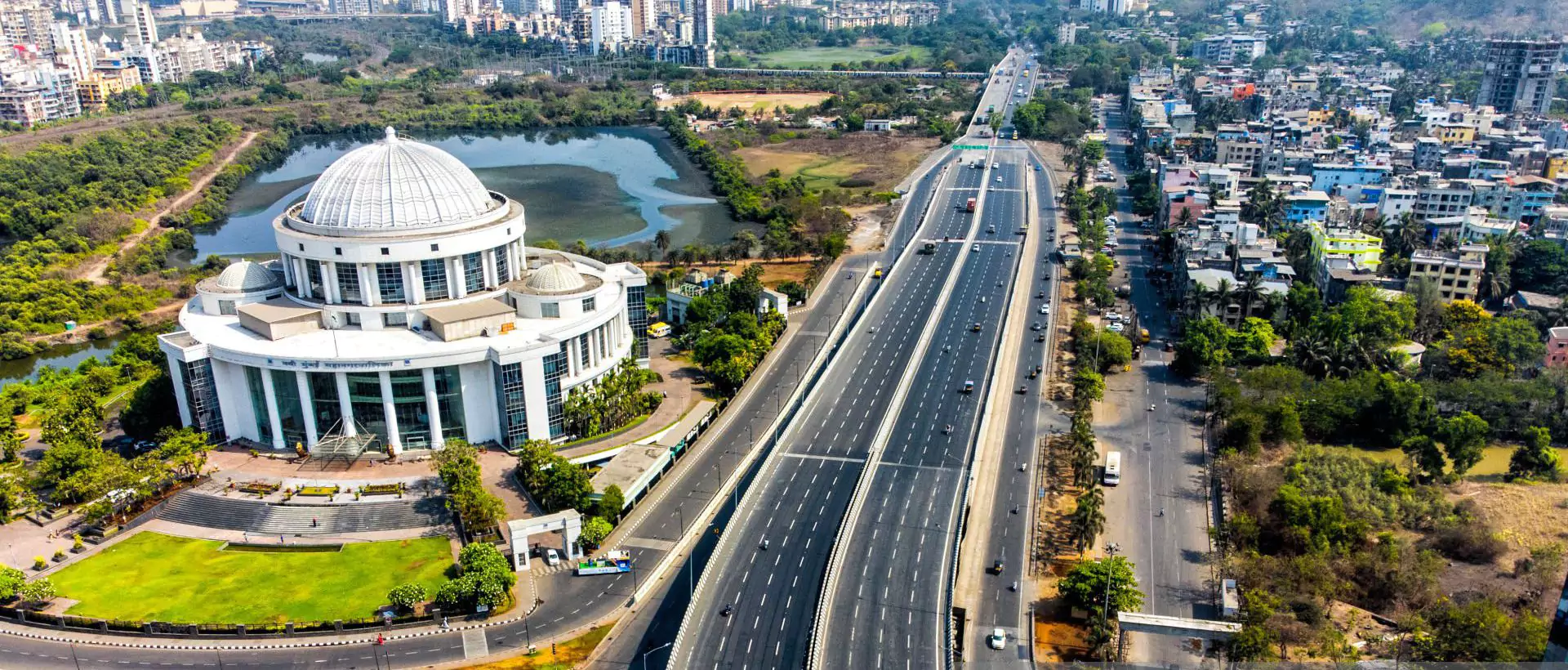
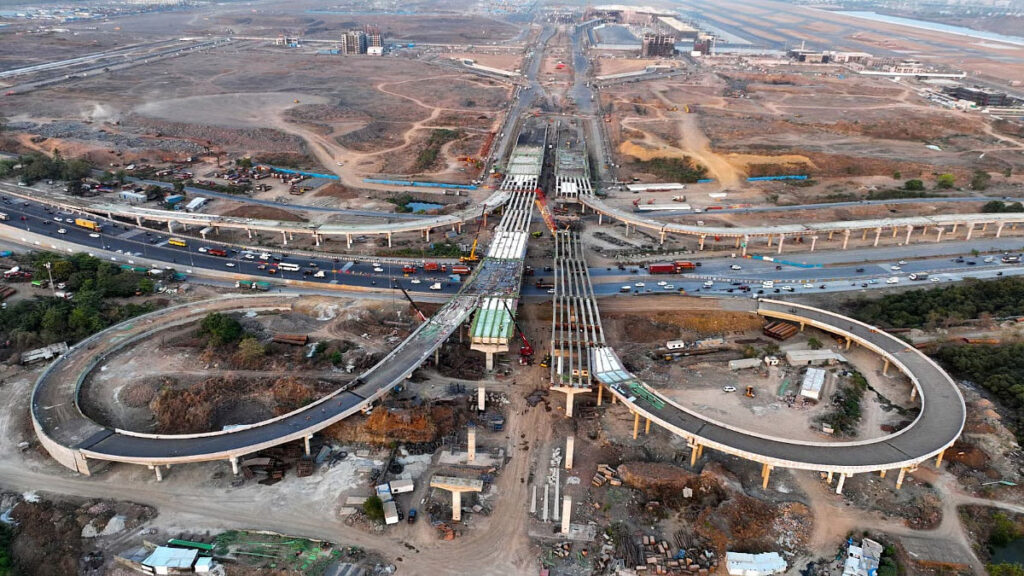
The Navi Mumbai Municipal Corporation (NMMC) has proposed a new flyover (or multiple flyovers) along the critical Thane–Belapur Road corridor, with an estimated budget of ₹400 crore, in order to manage increasing traffic volumes and industrial expansion in the region. (Loksatta)
Context & Need
- Thane-Belapur Road is one of Navi Mumbai’s principal roads passing through industrial belts under the jurisdiction of Maharashtra Industrial Development Corporation (MIDC). With the recent surge in residential and commercial development in the MIDC zones along this route, traffic load has escalated significantly. (Loksatta)
- The NMMC argues that as the region around the MIDC industrial estates changes into mixed use manufacturing + residential clusters the road network must evolve accordingly. The flyover proposal is aimed at decongesting the busy artery and improving connectivity. (Loksatta)
- Considering the upcoming expansion of connectivity including the new Navi Mumbai International Airport and other infrastructure projects the timing is considered crucial. (Loksatta)
Project Details & Budget Allocation
- NMMC has approached the MIDC seeking support: the proposal asks that the MIDC absorb half the estimated cost of the new flyovers (₹400 crore) given that much of the traffic burden is due to industrial and residential developments in MIDC‐regions. (Loksatta)
- The total cost of the flyover initiative is estimated at around ₹800 crore for the three new flyovers (as per NMMC’s internal estimates) but the ₹400 crore is what NMMC is requesting from MIDC. (Loksatta)
- While exact technical details (route length, number of lanes, design standard) are not fully published in the source, it is clear that the flyovers will address key junctions along Thane–Belapur Road between Taloja–Airoli–Turbhe corridors. (Loksatta)
Expected Impact
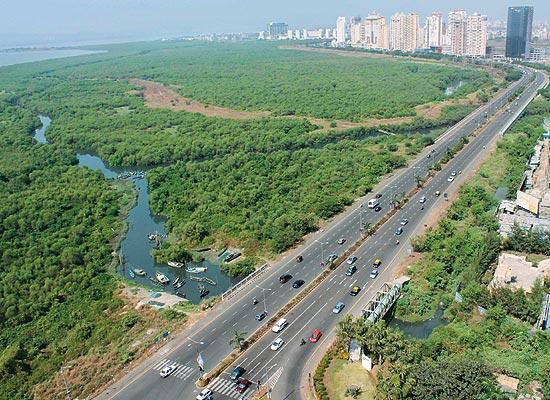
- Reduced congestion: By diverting through‐traffic and heavy vehicles onto elevated flyovers, the surface road can better serve local traffic and access to adjoining residential and industrial areas.
- Enhanced transit for industrial zones: With many factories, business parks, and warehouses along Thane–Belapur Road, smoother connectivity will aid logistics and reduce delays.
- Catalyst for growth: Improved road infrastructure often leads to increased real estate interest and further development; in a rapidly evolving zone like Navi Mumbai, this flyover could bolster area attractiveness.
- Reduced travel time & improved safety: Fewer intersections at grade level and improved grade separation would likely reduce conflict points (accidents) and reduce travel time, especially during peak hours.
Challenges & Considerations
- Land acquisition & right‐of‐way: Given the built‐up nature of the corridor, acquiring land (or relocating utilities) for ramps, piers, and approach roads could be complex and time‐consuming.
- Funding structure: The request for MIDC to fund half the cost highlights that project financing is a key hurdle; it remains to be seen how cost‐sharing will be finalised.
- Traffic management during construction: Building flyovers on an already congested route will require careful planning to minimise disruption to commuters and businesses along the corridor.
- Environmental/utility impact: Such projects often require moving utilities (electric, telecom, water), dealing with trees/green areas, and managing noise & dust during construction.
- Clear timelines and deliverables: The article does not specify the project start date, phases, or expected completion; transparency will help manage public expectations.
Why This Budget Makes Sense
- For major urban arterial flyovers in Indian metro‐regions, budgets of hundreds of crores are common given land, materials, span, design, and complexity.
- A ₹400 crore figure especially if intended for one or a few flyovers rather than a long elevated corridor seems in line with such projects in similar geographies.
- It also represents a significant investment in the road network of Navi Mumbai, underlining the municipality’s commitment to infrastructure ahead of further growth.
Outlook & Recommendations
- Early action: Since traffic burden is already high on the corridor, initiating preparatory works (DPR, utility mapping, stakeholder engagement) early will pay dividends.
- Transparent cost‐sharing mechanism: The roles of NMMC, MIDC, and potentially other agencies (state/central) should be clearly defined, including maintenance after construction.
- Phased implementation: It may be advantageous to build the project in segments tackling worst‐choke points first to deliver visible benefits early and build public confidence.
- Community and stakeholder outreach: Residents, businesses, and commuters along the route should be kept informed about construction scheduling, alternative routes and progress.
- Long‐term maintenance plan: Beyond construction, ensuring upkeep, structural health monitoring, and traffic safety will ensure the investment delivers enduring value.