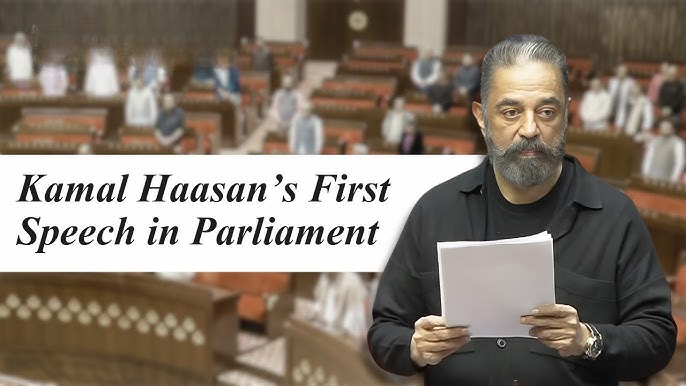
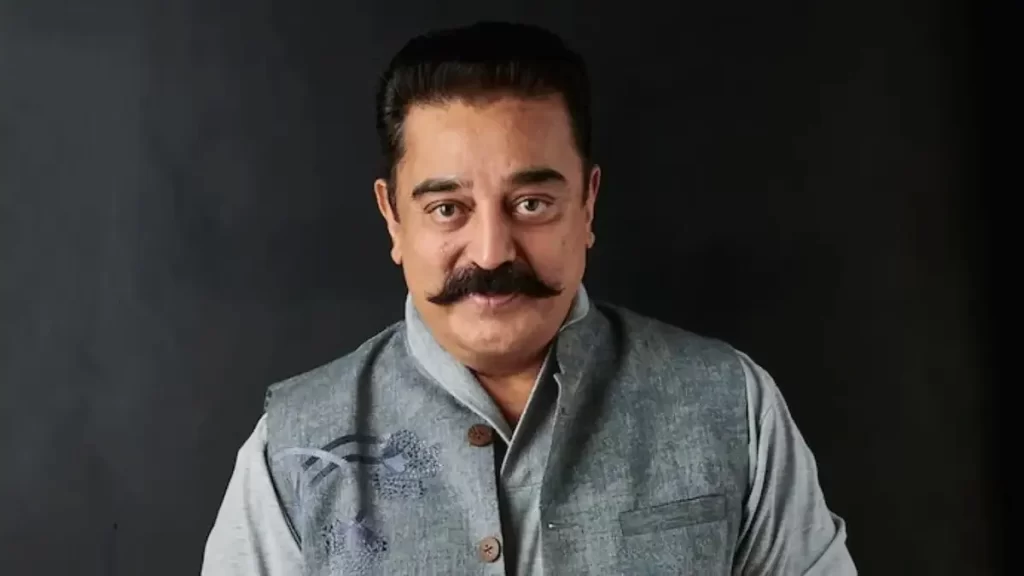
Kamal Haasan’s maiden speech in the Rajya Sabha has ignited a familiar yet deeply sensitive debate in Indian politics one in which language, ideology, and political symbolism collide. By describing the three-language formula under the National Education Policy (NEP) and the proposed SIR framework as a “disease giving rise to many living dead,” the actor-turned-politician chose provocation over restraint, ensuring that his entry into Parliament would not pass quietly.
Haasan’s remarks must be understood in the broader historical and political context of Tamil Nadu, where resistance to perceived linguistic imposition particularly Hindi has shaped decades of Dravidian politics. From anti-Hindi agitations in the mid-20th century to contemporary opposition against the NEP, language has never been a neutral administrative tool in the State; it is a marker of identity, autonomy, and cultural self-respect. Haasan’s criticism, therefore, was less a spontaneous outburst and more a continuation of a long-standing ideological position rooted in Tamil political consciousness.
However, the sharpness of his language also raises questions about parliamentary decorum and the effectiveness of confrontational rhetoric. While metaphors like “living dead” may energise political bases and dominate headlines, they risk oversimplifying complex policy debates. Education reform, multilingualism, and federal balance deserve scrutiny but through reasoned argument rather than inflammatory imagery. In a forum like the Rajya Sabha, which is meant to be a chamber of reflection, such language inevitably draws criticism.
The controversy deepened when Finance Minister Nirmala Sitharaman responded to allegations that she had earlier used derogatory words about the Tamil language. Sitharaman clarified that her remarks in 2025 were quotations from Periyar E.V. Ramasamy Naicker, cited in a historical or ideological context, and did not reflect her personal views. This clarification highlights another recurring tension in Indian political discourse: the selective reading of statements without full contextual framing.
Periyar himself remains a polarising figure revered by some as a radical social reformer and criticised by others for his extreme positions. Quoting him can easily be misconstrued as endorsement, especially in a climate where political narratives are often condensed into soundbites. Sitharaman’s defence underscores the importance of distinguishing between citation and conviction an increasingly rare distinction in contemporary debates.
At a deeper level, this episode reflects how language policy has become a proxy battlefield for larger anxieties about centralisation, cultural dominance, and regional autonomy. For leaders like Kamal Haasan, taking a hard stand reinforces credibility within Tamil Nadu’s political ecosystem. For the Union government, defending policy while avoiding cultural alienation remains a delicate balancing act.
Ultimately, the exchange reveals less about individual personalities and more about the state of India’s political conversation. Passion is inevitable in a diverse democracy, but when symbolism overtakes substance, the real issues educational outcomes, linguistic inclusion, and cooperative federalism risk being sidelined.
Haasan’s parliamentary debut has ensured attention. Whether it leads to deeper dialogue or further polarisation will depend on whether future debates move beyond rhetoric toward resolution.